

Does Blowing Your Nose Make Congestion Worse?
Dr. Akash Patel, MD, at Nova Medical Group, explains that while blowing your nose can temporarily relieve congestion, doing it too forcefully may actually push mucus deeper into the sinuses, increasing pressure and irritation. Gentle nose blowing, combined with saline sprays and steam inhalation, is a safer and more effective way to clear nasal passages. If congestion persists or worsens, it may signal an underlying infection requiring medical attention. For more information, please contact us today or book an appointment online. We are located at 401 N Bedford St, East Bridgewater, MA 02333.
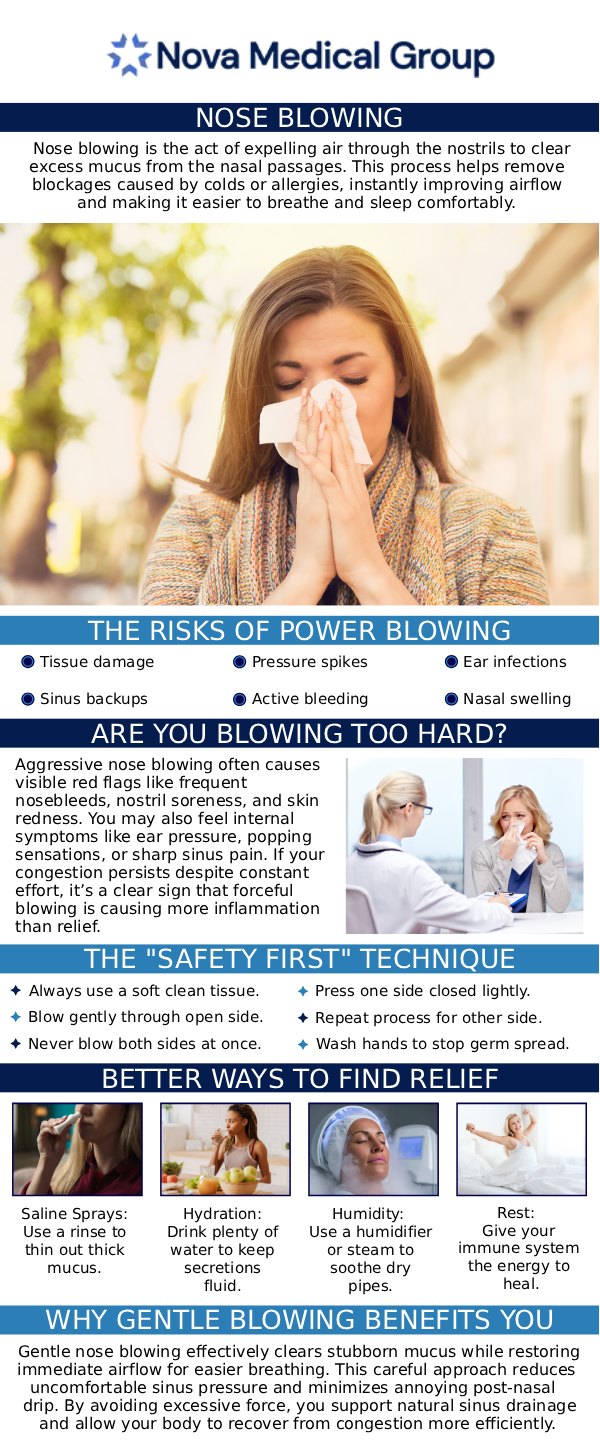
Table of Contents:
Is it better to blow your nose gently to avoid worsening congestion?
Can blowing your nose with an underlying infection make the situation worse?
How can Dr. Akash Patel, MD, relieve congestion without blowing my nose?
Does blowing your nose make it easier to breathe when you’re congested?
Yes, it is better to blow your nose gently to avoid worsening congestion. Blowing your nose forcefully can actually cause more harm than good. When you blow too hard, the pressure created in the nasal passages can force mucus and bacteria deeper into the sinuses, potentially leading to further irritation or even sinus infections. This can increase inflammation and worsen congestion, making it harder for the body to clear the mucus on its own.
At Nova Medical Group, Dr. Akash recommends blowing your nose gently to ensure that you are relieving congestion without putting unnecessary pressure on your sinuses. By gently pressing one nostril closed while blowing through the other, you can reduce the risk of forcing mucus into the sinuses. Additionally, using a saline nasal spray or a neti pot can help flush out mucus more effectively and safely. If you’re experiencing persistent or severe congestion, Nova Medical Group can guide treatments or medications to relieve symptoms and prevent further complications.
By practicing gentle nose blowing and incorporating proper hydration and saline solutions, you can reduce the risk of aggravating congestion and promote better sinus health.
Blowing your nose with an underlying infection can potentially make the situation worse. When you have a sinus infection, cold, or any other respiratory infection, your sinuses and nasal passages are inflamed. Blowing your nose too forcefully increases the pressure within these sensitive areas, which can force infected mucus deeper into the sinuses, leading to more severe congestion and possibly a prolonged infection.
Additionally, when you blow your nose during an infection, you may inadvertently cause the mucus to enter the ear canals, leading to a potential ear infection. The added pressure from forceful nose blowing can also cause discomfort and worsen the inflammation in the nasal and sinus passages, delaying recovery.
At Nova Medical Group, we advises against blowing your nose too forcefully when you have an infection. Instead, he recommends using a saline nasal spray to help loosen mucus, drinking plenty of fluids to stay hydrated, and using a humidifier to maintain moisture in the air. In some cases, Nova Medical Group may recommend medications or other treatments to reduce inflammation and clear mucus without aggravating the infection.
If you’re experiencing congestion and would prefer not to blow your nose, Dr. Akash Patel, MD, at Nova Medical Group can offer several alternative treatments that can help relieve congestion safely and effectively. One of the most effective ways to reduce congestion without the need for blowing your nose is through the use of saline nasal sprays or rinses. These solutions help flush out mucus, allergens, and irritants, promoting better sinus drainage without the added pressure of blowing your nose.
Another option recommended by Dr. Patel is using a warm compress or steam inhalation. A warm compress placed over the nose and sinuses can help loosen mucus and reduce inflammation, making it easier for your body to clear the congestion. Steam inhalation, such as taking a hot shower or inhaling steam from a bowl of hot water, can help open up the nasal passages and relieve sinus pressure.
If you’re experiencing severe or chronic congestion, Dr. Patel may also recommend decongestants or antihistamines to address underlying causes like allergies. For persistent cases, Nova Medical Group can offer specialized treatments, such as corticosteroids, to reduce inflammation and promote better sinus health. Dr. Patel’s goal is to provide comprehensive, gentle solutions that relieve your symptoms without causing further discomfort.
Blowing your nose can provide temporary relief and make it easier to breathe, but it’s not always the most effective long-term solution for congestion. When you’re congested, your nasal passages are blocked with mucus, and blowing your nose can help clear some of it out. However, if the mucus is thick or your congestion is due to an underlying issue like a sinus infection or allergies, blowing your nose might not clear everything out and could even worsen the situation. Forceful blowing can lead to increased pressure in your sinuses, which may cause more discomfort or even push mucus into areas that are harder to clear.
Instead of frequent or hard nose blowing, try using a saline spray to loosen mucus, or consider nasal irrigation to gently flush your sinuses. Staying hydrated, using a humidifier, or inhaling steam can also help keep your nasal passages moist and relieve congestion. If your breathing difficulties persist, it’s best to consult a doctor to identify the cause and receive appropriate treatment. Over-reliance on blowing your nose may mask underlying issues, so addressing the root cause is key for long-term relief. For more information, please contact us today or book an appointment online. We are located at 401 N Bedford St, East Bridgewater, MA 02333. We serve patients from East Bridgewater MA, Abington MA, Brockton MA, West Bridgewater MA, Easton MA, Taunton MA, Raynham MA, and surrounding areas.
Check Out Our 5 Star Reviews



Additional Services You May Need
▸ Urgent Care
▸ Primary Care
▸ Women’s Health
▸ Weight Management
▸ Diabetes Management
▸ High Blood Pressure
▸ Sports Medicine
▸ Specialty Services
▸ Occupational Health
▸ Adult Primary Care
▸ Pediatric Primary Care
▸ Geriatric Primary Care
▸ Fractures/Burns/Cuts
▸ Annual Physicals
▸ Hereditary Cancer Risk


 How May I Help You?